Database & Performance Engineering
Queries that were fast at ten thousand rows aren't fast at ten million. Schema decisions made early in a project's life become the ceiling on what the system can do later — and by the time it's a visible problem, it's usually a production incident.
What we build
- Schema design and normalization review
- Query optimization and indexing
- Database migration
- Full-text search implementation
- Reporting-layer architecture
- Geospatial data handling and query optimization
MSSQL, MySQL, MariaDB, and PostgreSQL.
Technical approach
Query and index optimization
Query plans reviewed against actual production data volume and access patterns, with indexing strategy built around the queries you actually run — not a generic index-everything approach.
Migration
Schema and data migrations planned around your uptime requirements, with a defined rollback path at every stage.
Full-text search
Search implemented at the database or search-engine layer depending on scale, replacing slow LIKE-based queries with indexed full-text search.
Geospatial data
GeoJSON-based mapping and geospatial query optimization for location-indexed datasets — built for national-scale administrative hierarchies, not just point lookups.
Related work

UNICEF BD Washdata
Arsenic detection system with facility tracking; maps arsenic levels and sanitation data using GeoJSON
~85% query performance improvement
Geospatial data platform architecture delivered for UNICEF Bangladesh by our lead engineer.
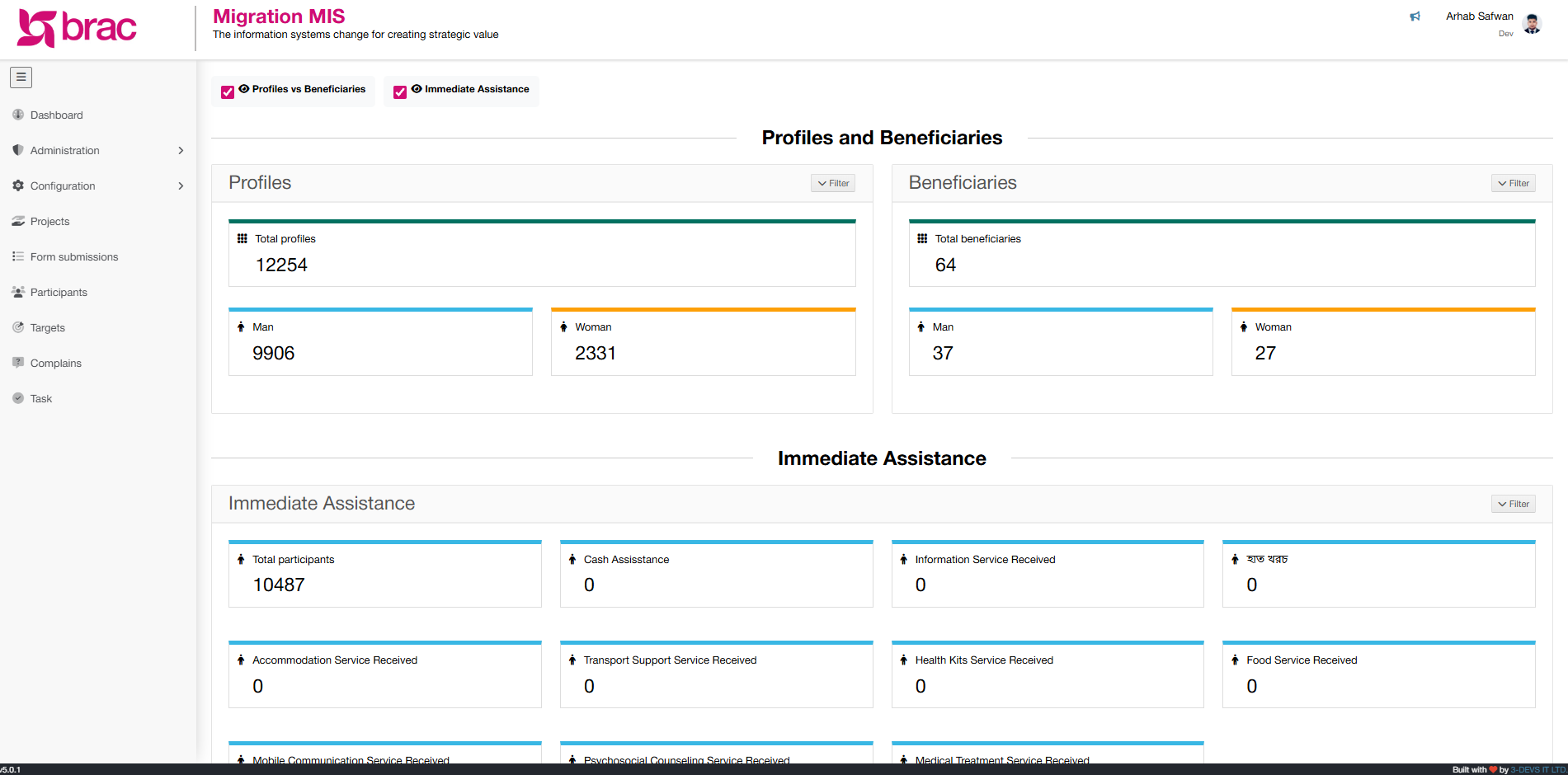
BRAC Migration Management
Complex RBAC-based system for managing immigrant data, financial support tracking, and reporting
~90% faster data retrieval
Core system architecture and full-stack engineering delivered for BRAC by our lead engineer.
Engagement model
Database and performance engagements are typically scoped as a fixed-price audit-and-fix project, or as an ongoing retainer for systems under continuous load growth.
Indicative starting price ranges are pending final confirmation from the team. See /pricing for engagement models once published.
Frequently asked
- Can you optimize an existing database without downtime?
- In most cases, yes — index and query changes are typically applied without downtime; schema migrations are planned around your specific uptime requirements.
- Which database engines do you work with?
- MSSQL, MySQL, MariaDB, and PostgreSQL.